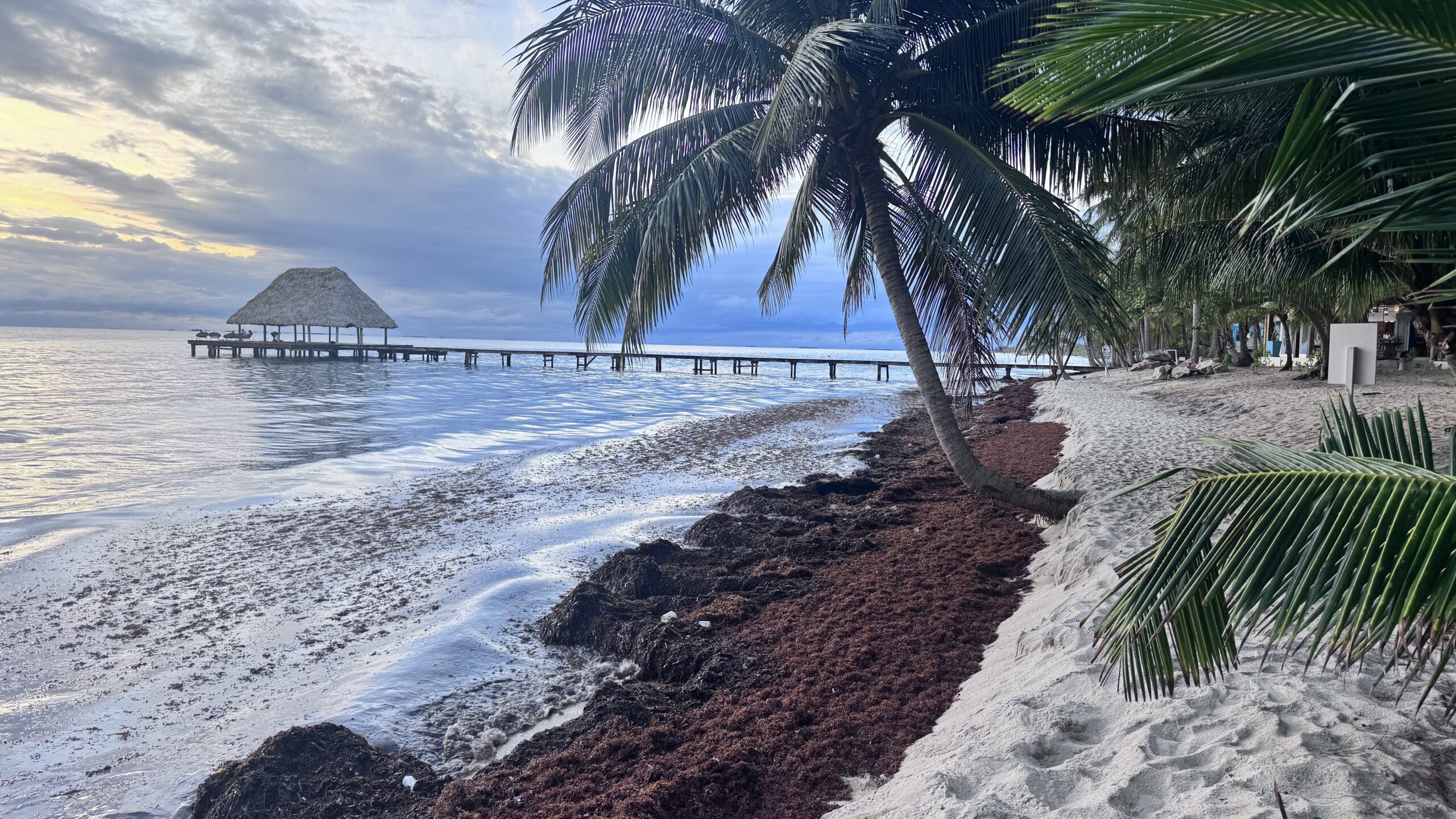
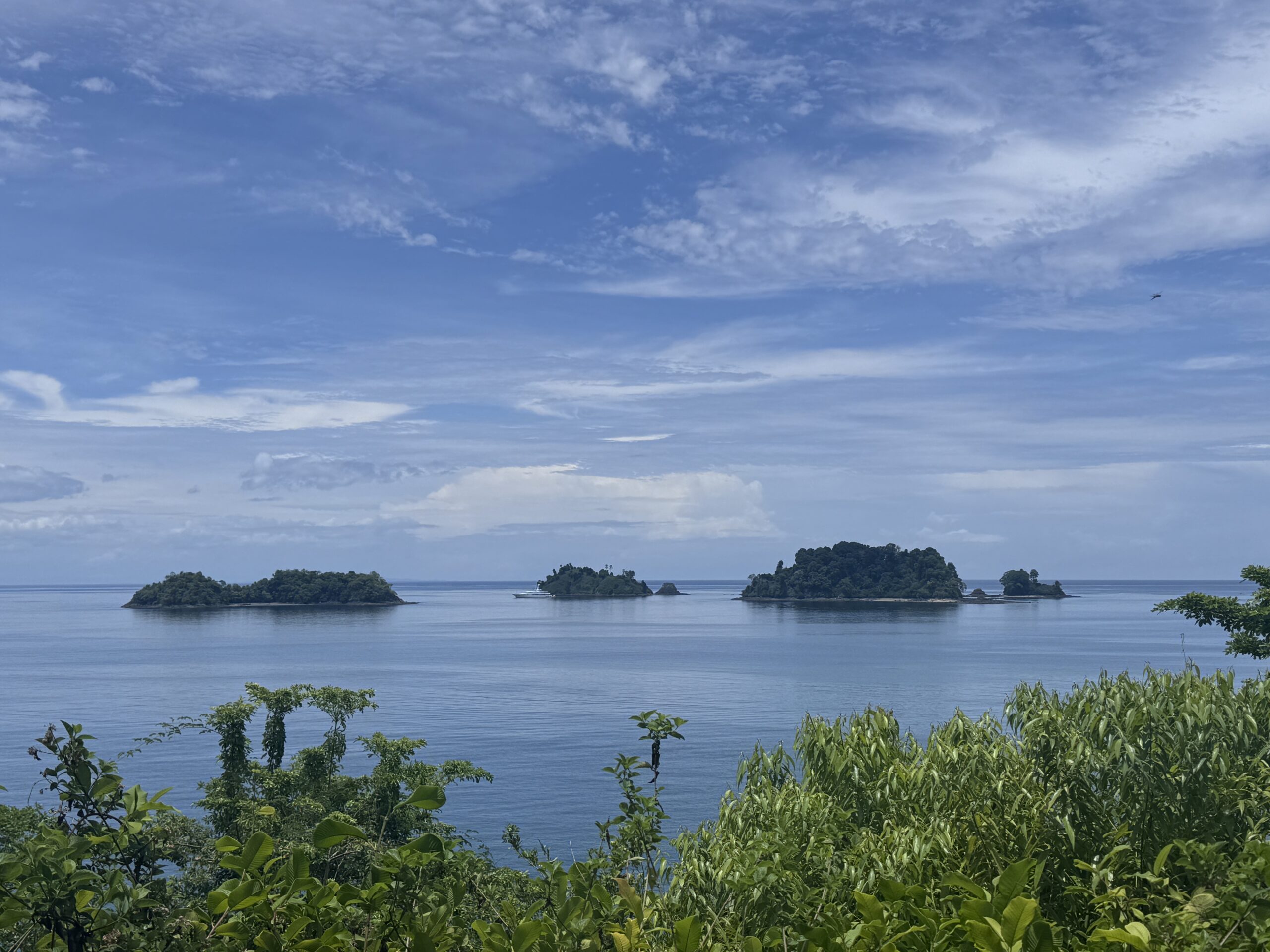
The Gulf of Montijo — 94,000 hectares on Panama’s Pacific coast and a Ramsar-recognized wetland — is dominated by mangrove forests that buffer storms, stabilize sediments, nurture fisheries, and store carbon. These ecosystems sustain local livelihoods, yet they face growing threats: shoreline erosion, altered sediment dynamics, agricultural encroachment, and the burrowing isopod Sphaeroma peruvianum, which undermines mangrove roots.
In 2023, Panama’s Ministry of Environment, supported by EUROCLIMA+ and Expertise France, launched an assessment to reduce coastal vulnerability in Montijo. IH Cantabria led the technical analysis — mapping shoreline dynamics, future sea-level scenarios, and ecosystem suitability — while ITACA Solutions led the human side: community engagement, voice amplification, and ensuring restoration strategies matched local realities.
From participation to empowerment
ITACA’s design principle was simple but decisive: restoration must restore agency, not only mangroves. Early on, we identified trusted local leadership. We partnered with Nelys Bósquez, founder of the women-led NGO ICEPED, not as a participant but as a lead delivery partner responsible for developing the community-based Mangrove Restoration Plan. Her credibility unlocked access, shaped workshop design, and translated technical findings into local meaning — transforming participants into co-owners rather than passive beneficiaries.
Most restoration projects count hectares planted or carbon sequestered. Those metrics matter, but they miss a second ledger: decisions, leadership, and ownership. In Montijo, decades of declining mangroves coincided with communities losing influence over decisions that affect their futures. Reversing ecological loss, therefore, had to be paired with shifting power back to local people.
Localizing the process
Project terms of reference originally requested only two validation workshops. That proved inadequate for an extensive gulf made of many distinct villages. ITACA thus facilitated eight workshops between February and August 2024, plus follow-up field visits and dialogues. Workshops were hosted across different communities, using locally managed venues and services to lower participation barriers and contribute through the workshops to the local economies.
Technical outputs from IH Cantabria were presented not as conclusions but as conversation tools. Maps and models were translated into accessible visual materials and combined with local knowledge — including past community-led restoration sites — in participatory mapping exercises. These maps were digitized and used to inform priority areas, ensuring that technical decisions reflected lived experience.
Peer-to-peer exchanges further strengthened learning; community members from Pedregal shared practical nursery, planting, and monitoring experience, strengthening regional knowledge flows. The lesson: engagement cannot be pre-packaged. Terms of reference and agendas must remain living documents, responsive to community pace and priorities.
Linking restoration to livelihoods
A core design choice was to avoid making restoration an abstract ecological exercise. ITACA led the co-design of a Local Economic Development Plan that aligned restoration with concrete income pathways. IH Cantabria’s ecological suitability maps indicated where mangroves could be protected and preserved; the economic plan answered how communities would benefit from active conservation efforts.
Led by local economist Ricardo Montenegro, the plan identified viable opportunities: community-managed nurseries supplying seedlings and generating jobs; fisheries value-chain improvements to raise artisanal fishers’ returns; small-scale ecotourism; sustainable aquaculture, agroforestry, and microenterprise development focused on women and youth. Crucially, the plan proposed a five-year investment framework with revolving funds, microfinance options, and potential payments for ecosystem services designed to make initiatives financially viable and promote long-term stewardship.
Lessons learned
Participation vs. empowerment. Attendance and signatures do not equal power. In Montijo, empowerment meant shifting decision-making: communities chose venues, hosted sessions, and set priorities. But empowerment is fragile without continuity — leaders who emerge can burn out if their roles depend solely on short-term stipends. Formalizing these roles is essential.
Avoiding the eco-precariat.As discussed in Building Bridges: Leveraging Science and Livelihood Development for Community-Driven Mangrove Restoration (Canevari et al., 2025), international debates warn that restoration can create precarious “eco-precariat” labour unless communities are framed as leaders and experts, not casual workers (Neimark et al., 2020). The Montijo plan intentionally positions local actors as skilled contributors deserving fair compensation and governance roles, not only as manual labour.
Align ecology and economy from day one. Restoration succeeds when ecological and livelihood planning proceed together. Designing economic pathways in parallel with ecological actions creates a common language between institutions and communities and turns ambition into local aspiration.
The financing gap
One year after plan finalization, implementation has not begun — not because communities or technical plans were lacking, but because the plans were not bankable. Budgets existed, but investment-ready structuring did not. This financing gap is systemic: short-term project cycles often end with robust plans but no route to scale or funding.
Recommendations (what would make it stronger)
Embed financial expertise early. Add a Project Development Specialist from project inception to translate activities into bankable proposals aligned with donor and investor criteria.
Strengthen governance engagement. Conduct rigorous governance analysis to map power, reduce elite capture risk, and establish clear accountability through MOUs with ICEPED and local groups.
Budget longer operational phases. Move beyond nine-month consultancies to at least 16 months of operational bridge funding to pilot nurseries, fisheries improvements, and ecotourism and maintain momentum.
Integrate tenure and monitoring. Systematically assess land tenure and complement remote sensing with ground-based biophysical monitoring (soil salinity, sedimentation, hydrological connectivity).
Closing reflections
Restoration is ultimately relational: between people and place, knowledge and power, plan and persistence. In Montijo, science provided the compass and community trust provided direction. Yet too many projects stop at planning. For restoration to take root, it must be matched by long-term financing, training that turns engagement into expertise, and local leadership that is structural rather than symbolic.
Montijo shows communities are ready — more ready than many institutions expect. What they need are the means to act. When restoration is designed with and by communities, it becomes not just ecological recovery but the restoration of agency itself.
Learning Through Practice: Reflections from Two Interns in Climate Action
Posted on
Caribbean Coast Solutions
Coastal Adaptation in Practice: Lessons from Across the Caribbean
Posted on
Climate change
The Translator in the Room: What Strategic Science Communication Really Looks Like from the Inside
Posted on
Blue carbon
Kickstarting Blue Carbon: Why Timing and Community Matter
Posted on
Climate change
Mental Health and Climate Change in Caribbean Small Island Developing States (SIDS)
Posted on
Previous
Next
sign up our newsletter
ITACA Solutions is a technical services provider focused on implementing climate adaptation in coastal areas in the Caribbean. Sign up to our mailing list to receive our newsletter with updates about our work, publications, activities and events.
Stay connected with ITACA
Get the latest insights, resources, and updates on climate adaptation across the Caribbean, delivered to your inbox.