Itaca

Written by:

Karla

Karla Gutierrez

There is a running joke in the world of development cooperation: communications teams are built by one person at a time. You start with a single hire who is expected to write, design, edit, photograph, post, strategize, and occasionally fix the website. The workload is real, the visibility is high, and, more often than not, the team is a team of one. 

I have heard this framing many times usually as a complaint, sometimes with humor, occasionally as a badge of honor. However, I want to make a different argument here. The real story of what a science communicator does in a technical organization is not about wearing too many hats. Instead, it is about what happens when you take off the hat of the outsider and sit down at the table with the specialists. 

itaca Watercolor illustration flat lay composition on a clean fcb55902 62a5 42c4 8adb 76f3428d977c 1
IMG 7757

The default model and its limits 

In many organizations working at the intersection of science, policy, and development, the communications function often arrives as an afterthought structurally, even when leadership recognizes it as essential strategically. Project grants rarely include a dedicated communications line. So the communicator arrives usually alone into a team of scientists and technical consultants who have spent years building deep expertise in coastal ecosystems, climate finance, or disaster risk reduction. 

Typically, the organization expects this communicator to act as a service provider: waiting for content to arrive, polishing it, and pushing it out. For a while, that might even work. But this passive model is fundamentally limited, and it underuses what a communicator actually brings to the table. 

Integration as a two-way street 

The most effective science communicators do not simply translate after the science is done. Instead, they embed themselves during the process, joining conversations, asking questions, and helping teams think about audience and impact from the beginning. 

When communicators understand the work deeply, they can do more than simplify. For example, they can identify what is genuinely significant, what will resonate with a donor, or what a community on the ground actually needs to hear. That is a fundamentally different contribution than editing a final report. 

There is a concept from the science-policy literature that captures this well: the knowledge broker is an intermediary who does not simply relay information, but bridges the gap between those who produce knowledge and those who need to use it. In development cooperation, this role is critical. A project team may produce rigorous findings on coastal vulnerability, but if those findings arrive at a donor meeting as a 40-page technical report, they may not move anyone to act. Instead, they need to arrive as a story, a brief, a conversation, not dumbed down, but made relevant to the person in the room. 

Importantly, the communicator also learns along the way. Every conversation with a specialist, every technical concept researched in order to write about it accurately, builds a depth of understanding that makes the next piece of communication better. In other words, it is a genuine exchange, not a one-way service. 

IMG 3590

Being Invited to the Table 

Looking back at my experience at ITACA and at other organizations I have worked with, the moments that shaped me most as a communicator were not the ones where I was handed a brief. Instead, they were the ones where I was in the field, or in a meeting where the actual work was being discussed  and I was there not as a note-taker, but as someone whose perspective was genuinely wanted. 

Being invited to the table is not about dumbing things down. That framing misses the point entirely. Rather, it is about having access to the bigger picture: understanding not just what a project does, but what it is trying to change, for whom, and why that change matters. 

Knowing the People Behind the Work 

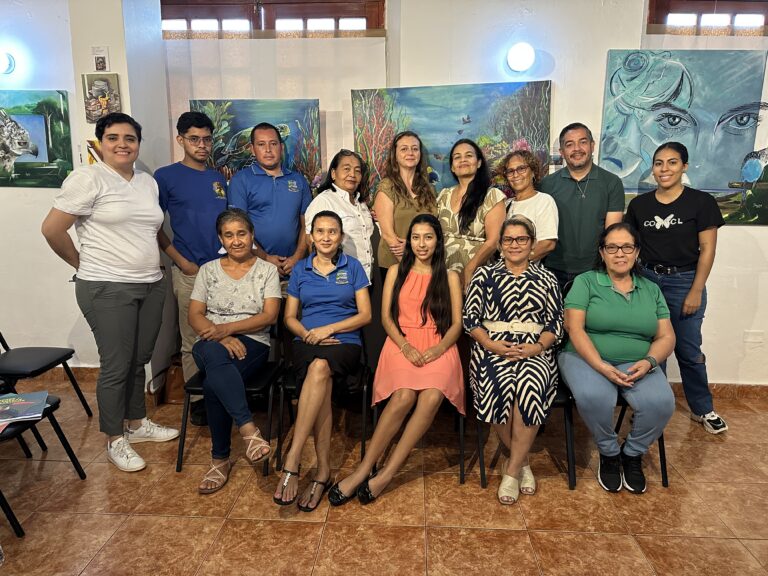
Some of the most important lessons I have learned at ITACA have come from getting to know the beneficiaries of our projects personally, the fishing communities, the local leaders, the people whose livelihoods depend on healthy coastlines and functioning ecosystems. Once you have met someone whose story is embedded in the work, you communicate it differently. Instead of writing about a coastal community in the abstract, you write about people you have sat with, whose names you know, whose concerns you have heard directly. That specificity changes everything about how a story lands. 

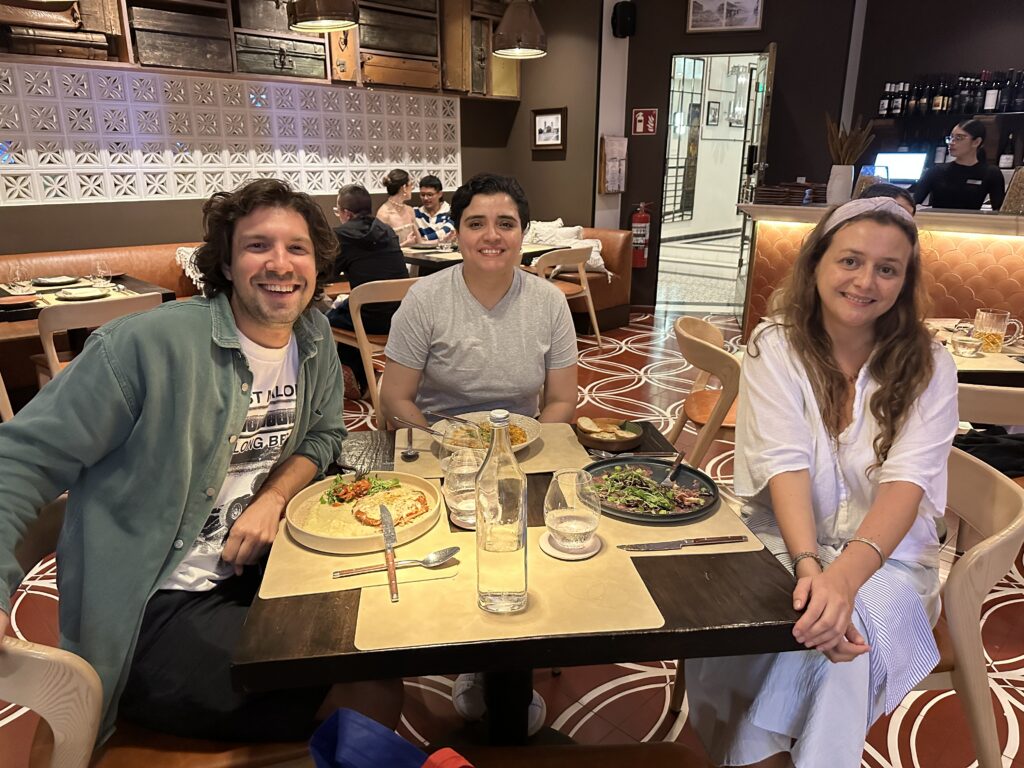
The same is true of getting to know the team. Technical specialists, project managers, and field coordinators bring something more when those relationships are built through real collaboration rather than transactional email exchanges. Over time, you start to understand not just what people are working on, but how they think, what they care about, and where they feel their work is misunderstood. That understanding feeds directly into communication that is more honest, more nuanced, and more useful — for donors, for partners, and for the communities the work is meant to serve. 

This, then, is the value of a communicator who is genuinely embedded: not someone who translates science into simpler language, but someone who helps hold the full picture, the technical depth, the human stakes, and the story that connects the two. In climate adaptation work, that full picture is not a luxury. It is the whole point. 

A few things I have learned along the way 

For anyone navigating a similar role whether you are building a communications function from scratch or trying to find your footing within a technical team these are the principles that have mattered most to me: 

  1. Be strategic in the conversations you have with your colleagues. Getting to know what your teammates work on should not be limited to what lands in your inbox. Ask about their projects, their methodologies, their frustrations. Show genuine curiosity about the substance of the work. Those conversations are not a distraction from your job, they are your job. 
  2. Ask the questions. Be curious. There is no such thing as a naive question when you are trying to understand something well enough to communicate it. Scientists and technical specialists generally appreciate someone who wants to understand their work properly. Curiosity builds trust, and trust opens doors. 
  3. Do not underestimate what you already know. The value a communicator brings is not just professional — it is personal. Every experience you carry into this work, every community you have been part of, every field you have studied or curiosity you have pursued, shapes how you see and frame things. Collaboration is not about erasing your own perspective in favor of the technical one. It is about bringing both to the table. 
  4. Stay open to continuous learning. The topics we work on climate adaptation, coastal resilience, ecosystem dynamics are complex and evolving. You will not master them. That is not the goal. The goal is to remain genuinely engaged with the learning process, so that your understanding deepens over time and your communication reflects that depth. 
IMG 3686

Related posts

sign up for our newsletter

ITACA Solutions is a technical services provider focused on implementing climate adaptation in coastal areas in the Caribbean. Sign up to our mailing list to receive our newsletter with updates about our work, publications, activities and events.